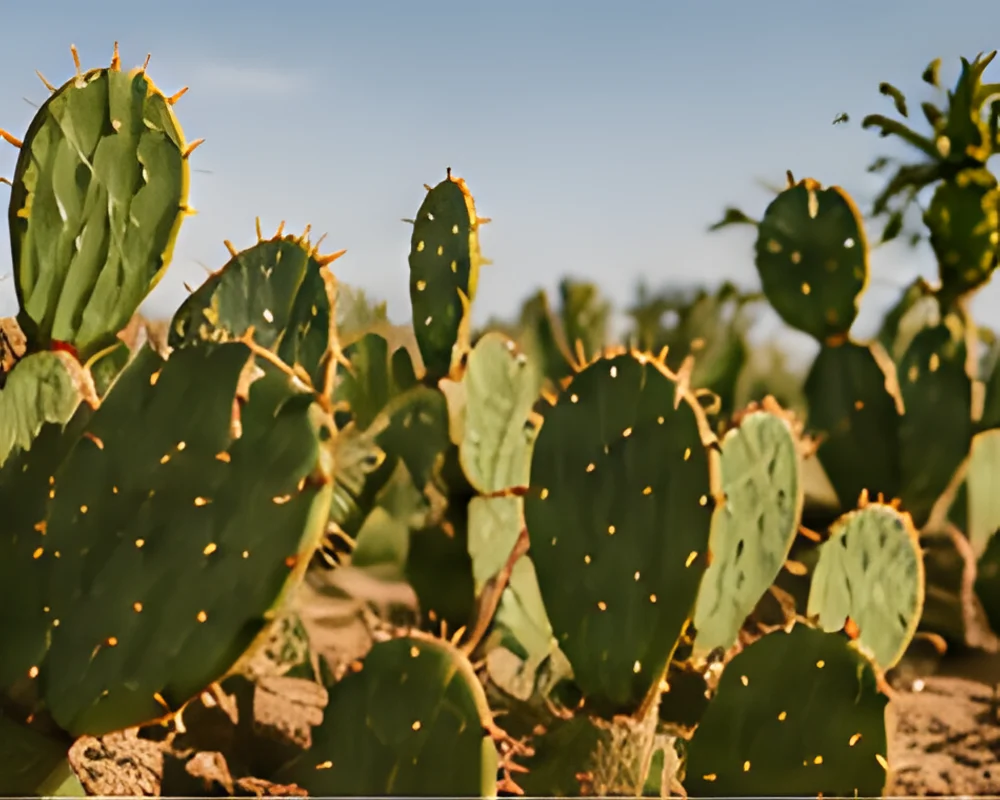
Every cactus leather supplier has its own process, and the specifics are usually proprietary. The broad stages, however, are consistent enough to describe. This is the sequence most cactus leathers follow.
1. Harvesting the pads
Mature pads are cut from the prickly pear plant. Because the plant keeps growing from the base and remaining pads, harvesting selected pads does not require removing the whole plant. Prickly pear is also known for tolerating dry conditions, which is part of why it attracts interest as a material source.
2. Cleaning and processing
The pads are cleaned and processed — typically cut down and mashed — to break the plant structure into a workable form.
3. Drying
The processed material is dried until it reaches a suitable moisture level. Some suppliers describe sun-drying; others use controlled drying. The goal is a stable plant material that can be blended consistently.
4. Formulation
The dried plant material is combined with a binder and other additives — pigments, for example — to create a coating compound. The binder determines much of the final material’s flexibility, abrasion resistance and longevity.
5. Coating onto a backing
The compound is applied in layers onto a textile backing and cured. The backing provides structure and tear strength; the coating provides the surface you see and touch.
6. Finishing
Finally the surface is embossed with a grain, given its colour and finish, inspected and rolled. From here it behaves much like any other sheet material in a workshop: it is cut to pattern, edge-finished and stitched.
What this means for products
- Thickness and colour are consistent across a roll, which makes clean, structured shapes easier.
- Edges are usually folded or painted, because a raw cut shows the backing layer.
- Performance depends heavily on the specific formulation — which is why it is worth asking brands what they use.
Read next: Is Cactus Leather Durable?